• Home
  • Travel
  • Life Style
    • Category
    • Category
    • Category
  • About
  • Contact
  • Download

thgirlherattidute

facebook google twitter tumblr instagram linkedin

Download Commercial LawBy Robert Bradgate

ever before worry if this Commercial LawBy Robert Bradgate is not your favourite book. We are below not only giving the only book. You can search the title in this internet site and locate the hundreds collections of the books. You recognize, the books that we supply are coming from all libraries and publisher in the world. You may select title to title to acquire the books to review. However previously, juts aim to get this publication since it's really eye-catching. Attempt it and comment!

Commercial LawBy Robert Bradgate

Commercial LawBy Robert Bradgate


Commercial LawBy Robert Bradgate


Download Commercial LawBy Robert Bradgate

If you are still back to back to find the ideal book to check out, we have provided a wonderful book as candidates. Commercial LawBy Robert Bradgate as one of the referred publications in this post can be taken pleasure in now. It is not just regarding the title that is really intriguing and also attracts individuals ahead reviewing it. And also why we provide this book to you is that it will be your buddy along your spare time.

The way to obtain this book Commercial LawBy Robert Bradgate is very simple. You may not go for some places as well as spend the time to just locate guide Commercial LawBy Robert Bradgate As a matter of fact, you might not consistently obtain the book as you agree. Yet here, only by search and locate Commercial LawBy Robert Bradgate, you could get the lists of guides that you really anticipate. In some cases, there are many publications that are revealed. Those books naturally will surprise you as this Commercial LawBy Robert Bradgate compilation.

Connected to why this Commercial LawBy Robert Bradgate exists initially right here is that this referred publication is the one that you are trying to find, typically aren't you? Numerous are likewise same with you. They additionally seek for this excellent publication as one of the sources to review today. The referred book in this kind is mosting likely to offer the choice of knowledge to obtain. It is not just the specific society however also for the general public. This is why, you should occur in collecting all lessons, and also information concerning what this book has actually been created.

Interested in this book is must. You might be other people who need the information and also information concerning the topic that have actually been written in this publication. The Commercial LawBy Robert Bradgate issue concerning the fascinating subject pertaining to the condition today. When you have actually determined to acquire this book, you can see the web link below. It will straight worry you to gain guide as your own. As well as the soft documents is what you could give to you. Let's obtain guide and review it now.

Commercial LawBy Robert Bradgate

  • Sales Rank: #10295870 in Books
  • Published on: 2012-01-30
  • Original language: English
  • Dimensions: .0" h x .0" w x .0" l, .0 pounds
  • Binding: Paperback

Commercial LawBy Robert Bradgate PDF
Commercial LawBy Robert Bradgate EPub
Commercial LawBy Robert Bradgate Doc
Commercial LawBy Robert Bradgate iBooks
Commercial LawBy Robert Bradgate rtf
Commercial LawBy Robert Bradgate Mobipocket
Commercial LawBy Robert Bradgate Kindle

Commercial LawBy Robert Bradgate PDF

Commercial LawBy Robert Bradgate PDF

Commercial LawBy Robert Bradgate PDF
Share
Tweet
Pin
Share
No komentar

PDF Ebook In Order to Live: A North Korean Girl's Journey to FreedomBy Yeonmi Park, Maryanne Vollers

We offer In Order To Live: A North Korean Girl's Journey To FreedomBy Yeonmi Park, Maryanne Vollers that is written for answering your concerns for this time around. This suggested publication can be the factor of you to lays extra little time in the evening or in your office. But, it will not disrupt your works or obligations, naturally. Taking care of the moment to not only obtain and also read the book is in fact very easy. You could only require few times in a day to end up a page to some pages for this In Order To Live: A North Korean Girl's Journey To FreedomBy Yeonmi Park, Maryanne Vollers It will not charge so difficult to then finish guide till completion.

In Order to Live: A North Korean Girl's Journey to FreedomBy Yeonmi Park, Maryanne Vollers

In Order to Live: A North Korean Girl's Journey to FreedomBy Yeonmi Park, Maryanne Vollers


In Order to Live: A North Korean Girl's Journey to FreedomBy Yeonmi Park, Maryanne Vollers


PDF Ebook In Order to Live: A North Korean Girl's Journey to FreedomBy Yeonmi Park, Maryanne Vollers

If you are still back to back to discover the right publication to review, we have actually offered an excellent book as candidates. In Order To Live: A North Korean Girl's Journey To FreedomBy Yeonmi Park, Maryanne Vollers as one of the referred books in this write-up can be taken pleasure in now. It is not only regarding the title that is very interesting and attracts individuals to find reviewing it. As well as why we provide this publication to you is that it will be your good friend along your free time.

This book is one recommended book that can heal and deal with the time you have. Spare time is the best time to read a book. When there are no friends to talk with, this is better to utilize that time for reading. If you are being in the long waiting lists, this is also the perfect time to read or even being on an enjoyable trip. In Order To Live: A North Korean Girl's Journey To FreedomBy Yeonmi Park, Maryanne Vollers can be a good friend; of course this simple book will perform as good as you think about.

This is several of the benefits to take when being the participant and obtain guide In Order To Live: A North Korean Girl's Journey To FreedomBy Yeonmi Park, Maryanne Vollers right here. Still ask exactly what's various of the other site? We give the hundreds titles that are produced by recommended writers as well as publishers, all over the world. The link to purchase as well as download and install In Order To Live: A North Korean Girl's Journey To FreedomBy Yeonmi Park, Maryanne Vollers is likewise extremely simple. You may not find the difficult website that order to do even more. So, the way for you to get this In Order To Live: A North Korean Girl's Journey To FreedomBy Yeonmi Park, Maryanne Vollers will be so simple, won't you?

Currently, when you need a new close friend to accompany you encountering and also resolving the obstacles, In Order To Live: A North Korean Girl's Journey To FreedomBy Yeonmi Park, Maryanne Vollers is the candidate to advise. It can accompany you any place you go ad you need. It's developed for soft data, so you will not feel hard to find and open it. Juts open the tab and after that review it. By doing this can be done obviously after you are obtaining the documents via this internet site. So, your task is by clicking the link of that publication to go to.

In Order to Live: A North Korean Girl's Journey to FreedomBy Yeonmi Park, Maryanne Vollers

Yeonmi Park has told the harrowing story of her escape from North Korea as a child many times, but never before has she revealed the most intimate and devastating details of the repressive society she was raised in and the enormous price she paid to escape.

Park’s family was loving and close-knit, but life in North Korea was brutal, practically medieval. Park would regularly go without food and was made to believe that, Kim Jong Il, the country’s dictator, could read her mind. After her father was imprisoned and tortured by the regime for trading on the black-market, a risk he took in order to provide for his wife and two young daughters, Yeonmi and her family were branded as criminals and forced to the cruel margins of North Korean society. With thirteen-year-old Park suffering from a botched appendectomy and weighing a mere sixty pounds, she and her mother were smuggled across the border into China.

I wasn’t dreaming of freedom when I escaped from North Korea. I didn’t even know what it meant to be free. All I knew was that if my family stayed behind, we would probably die—from starvation, from disease, from the inhuman conditions of a prison labor camp. The hunger had become unbearable; I was willing to risk my life for the promise of a bowl of rice. But there was more to our journey than our own survival. My mother and I were searching for my older sister, Eunmi, who had left for China a few days earlier and had not been heard from since.

Park knew the journey would be difficult, but could not have imagined the extent of the hardship to come. Those years in China cost Park her childhood, and nearly her life.  By the time she and her mother made their way to South Korea two years later, her father was dead and her sister was still missing. Before now, only her mother knew what really happened between the time they crossed the Yalu river into China and when they followed the stars through the frigid Gobi Desert to freedom. As she writes, “I convinced myself that a lot of what I had experienced never happened. I taught myself to forget the rest.”

In In Order to Live, Park shines a light not just into the darkest corners of life in North Korea, descibing the deprivation and deception she endured and which millions of North Korean people continue to endure to this day, but also onto her own most painful and difficult memories. She tells with bravery and dignity for the first time the story of how she and her mother were betrayed and sold into sexual slavery in China and forced to suffer terrible psychological and physical hardship before they finally made their way to Seoul, South Korea—and to freedom.

Still in her early twenties, Yeonmi Park has lived through experiences that few people of any age will ever know—and most people would never recover from. Park confronts her past with a startling resilience, refusing to be defeated or defined by the circumstances of her former life in North Korea and China. In spite of everything, she has never stopped being proud of where she is from, and never stopped striving for a better life. Indeed, today she is a human rights activist working determinedly to bring attention to the oppression taking place in her home country.

Park’s testimony is rare, edifying, and terribly important, and the story she tells in In Order to Live is heartbreaking and unimaginable, but never without hope. Her voice is riveting and dignified. This is the human spirit at its most indomitable.

  • Sales Rank: #35883 in Books
  • Published on: 2015-09-29
  • Released on: 2015-09-29
  • Original language: English
  • Number of items: 1
  • Dimensions: 9.50" h x 1.00" w x 6.50" l, 1.00 pounds
  • Binding: Hardcover
  • 288 pages

About the Author
Yeonmi Park is a human rights activist who was born in North Korea.

Excerpt. © Reprinted by permission. All rights reserved.

Visit http://bit.ly/1KfF28h for a larger version of this map.


Prologue

On the cold, black night of March 31, 2007, my mother and I scrambled down the steep, rocky bank of the frozen Yalu River that divides North Korea and China. There were patrols above us and below, and guard posts one hundred yards on either side of us manned by soldiers ready to shoot anyone attempting to cross the border. We had no idea what would come next, but we were desperate to get to China, where there might be a chance to survive.

I was thirteen years old and weighed only sixty pounds. Just a week earlier, I’d been in a hospital in my hometown of Hyesan along the Chinese border, suffering from a severe intestinal infection that the doctors had mistakenly diagnosed as appendicitis. I was still in terrible pain from the incision, and was so weak I could barely walk.

The young North Korean smuggler who was guiding us across the border insisted we had to go that night. He had paid some guards to look the other way, but he couldn’t bribe all the soldiers in the area, so we had to be extremely cautious. I followed him in the darkness, but I was so unsteady that I had to scoot down the bank on my bottom, sending small avalanches of rocks crashing ahead of me. He turned and whispered angrily for me to stop making so much noise. But it was too late. We could see the silhouette of a North Korean soldier climbing up from the riverbed. If this was one of the bribed border guards, he didn’t seem to recognize us.

“Go back!” the soldier shouted. “Get out of here!”

Our guide scrambled down to meet him and we could hear them talking in hushed voices. Our guide returned alone.

“Let’s go,” he said. “Hurry!”

It was early spring, and the weather was getting warmer, melting patches of the frozen river. The place where we crossed was steep and narrow, protected from the sun during the day so it was still solid enough to hold our weight—we hoped. Our guide made a cell phone call to someone on the other side, the Chinese side, and then whispered, “Run!”

The guide started running, but my feet would not move and I clung to my mother. I was so scared that I was completely paralyzed. The guide ran back for us, grabbed my hands, and dragged me across the ice. When we reached solid ground, we started running and didn’t stop until we were out of sight of the border guards.

The riverbank was dark, but the lights of Chaingbai, China, glowed just ahead of us. I turned to take a quick glance back at the place where I was born. The electric power grid was down, as usual, and all I could see was a black, lifeless horizon. I felt my heart pounding out of my chest as we arrived at a small shack on the edge of some flat, vacant fields.

I wasn’t dreaming of freedom when I escaped from North Korea. I didn’t even know what it meant to be free. All I knew was that if my family stayed behind, we would probably die—from starvation, from disease, from the inhuman conditions of a prison labor camp. The hunger had become unbearable; I was willing to risk my life for the promise of a bowl of rice.

But there was more to our journey than our own survival. My mother and I were searching for my older sister, Eunmi, who had left for China a few days earlier and had not been heard from since. We hoped that she would be there waiting for us when we crossed the river. Instead the only person to greet us was a bald, middle-aged Chinese man, an ethnic North Korean like many of the people living in this border area. The man said something to my mother, and then led her around the side of the building. From where I waited I could hear my mother pleading, “Aniyo! Aniyo!” No! No!

I knew then that something was terribly wrong. We had come to a bad place, maybe even worse than the one we had left.

•   •   •

I am most grateful for two things: that I was born in North Korea, and that I escaped from North Korea. Both of these events shaped me, and I would not trade them for an ordinary and peaceful life. But there is more to the story of how I became who I am today.

Like tens of thousands of other North Koreans, I escaped my homeland and settled in South Korea, where we are still considered citizens, as if a sealed border and nearly seventy years of conflict and tension never divided us. North and South Koreans have the same ethnic backgrounds, and we speak the same language—except in the North there are no words for things like “shopping malls,” “liberty,” or even “love,” at least as the rest of the world knows it. The only true “love” we can express is worship for the Kims, a dynasty of dictators who have ruled North Korea for three generations. The regime blocks all outside information, all videos and movies, and jams radio signals. There is no World Wide Web and no Wikipedia. The only books are filled with propaganda telling us that we live in the greatest country in the world, even though at least half of North Koreans live in extreme poverty and many are chronically malnourished. My former country doesn’t even call itself North Korea—it claims to be Chosun, the true Korea, a perfect socialist paradise where 25 million people live only to serve the Supreme Leader, Kim Jong Un. Many of us who have escaped call ourselves “defectors” because by refusing to accept our fate and die for the Leader, we have deserted our duty. The regime calls us traitors. If I tried to return, I would be executed.

The information blockade works both ways: not only does the government attempt to keep all foreign media from reaching its people, it also prevents outsiders from learning the truth about North Korea. The regime is known as the Hermit Kingdom because it tries to make itself unknowable. Only those of us who have escaped can descibe what really goes on behind the sealed borders. But until recently, our stories were seldom heard.

I arrived in South Korea in the spring of 2009, a fifteen-year-old with no money and the equivalent of two years of primary school. Five years later, I was a sophomore at a top university in Seoul, a police administration major with a growing awareness of the burning need for justice in the land where I was born.

I have told the story of my escape from North Korea many times, in many forums. I have descibed how human traffickers tricked my mother and me into following them to China, where my mother protected me and sacrificed herself to be raped by the broker who had targeted me. Once in China, we continued to look for my sister, without success. My father crossed the border to join us in our search, but he died of untreated cancer a few months later. In 2009, my mother and I were rescued by Christian missionaries, who led us to the Mongolian border with China. From there we walked through the frigid Gobi Desert one endless winter night, following the stars to freedom.

All this is true, but it is not the whole story.

Before now, only my mother knew what really happened in the two years that passed between the night we crossed the Yalu River into China and the day we arrived in South Korea to begin a new life. I told almost nothing of my story to the other defectors and human rights advocates I met in South Korea. I believed that, somehow, if I refused to acknowledge the unspeakable past, it would disappear. I convinced myself that a lot of it never happened; I taught myself to forget the rest.

But as I began to write this book, I realized that without the whole truth my life would have no power, no real meaning. With the help of my mother, the memories of our lives in North Korea and China came back to me like scenes from a forgotten nightmare. Some of the images reappeared with a terrible clarity; others were hazy, or scrambled like a deck of cards spilled on the floor. The process of writing has been the process of remembering, and of trying to make sense out of those memories.

Along with writing, reading has helped me order my world. As soon as I arrived in South Korea and could get my hands on translations of the world’s great books, I began devouring them. Later I was able to read them in English. And as I began to write my own book, I came across a famous line by Joan Didion, “We tell ourselves stories in order to live.” Even though the writer and I come from such different cultures, I feel the truth of those words echoing inside me. I understand that sometimes the only way we can survive our own memories is to shape them into a story that makes sense out of events that seem inexplicable.

Along my journey I have seen the horrors that humans can inflict on one another, but I’ve also witnessed acts of tenderness and kindness and sacrifice in the worst imaginable circumstances. I know that it is possible to lose part of your humanity in order to survive. But I also know that the spark of human dignity is never completely extinguished, and that given the oxygen of freedom and the power of love, it can grow again.

This is my story of the choices I made in order to live.

PART ONE

North Korea

One

Even the Birds and Mice Can Hear You Whisper

The Yalu River winds like the tail of a dragon between China and North Korea on its way to the Yellow Sea. At Hyesan it opens into a valley in the Paektu Mountains, where the city of 200,000 sprawls between rolling hills and a high plateau covered with fields, patches of trees, and graves. The river, usually shallow and tame, is frozen solid during winter, which lasts the better part of the year. This is the coldest part of North Korea, with temperatures sometimes plunging to minus-40 degrees Fahrenheit. Only the toughest survive.

To me, Hyesan was home.

Just across the river is the Chinese city of Chaingbai, which has a large population of ethnic Koreans. Families on both sides of the border have been trading with one another for generations. As a child I would often stand in the darkness and stare across the river at the lights of Chaingbai, wondering what was going on beyond my city’s limits. It was exciting to watch the colorful fireworks explode in the velvet black sky during festivals and Chinese New Year. We never had such things on our side of the border. Sometimes, when I walked down to the river to fill my buckets with water and the damp wind was blowing just right, I could actually smell delicious food, oily noodles and dumplings cooking in the kitchens on the other side. The same wind carried the voices of the Chinese children who were playing on the opposite bank.

“Hey, you! Are you hungry over there?” the boys shouted in Korean.

“No! Shut up, you fat Chinese!” I shouted back.

This wasn’t true. In fact, I was very hungry, but there was no use in talking about it.

•   •   •

I came into this world too soon.

My mother was only seven months pregnant when she went into labor, and when I was born on October 4, 1993, I weighed less than three pounds. The doctor at the hospital in Hyesan told my mother that I was so small there wasn’t anything they could do for me. “She might live or she might die,” he said. “We don’t know.” It was up to me to live.

No matter how many blankets my mother wrapped around me, she couldn’t keep me warm. So she heated up a stone and put it in the blanket with me, and that’s how I survived. A few days later, my parents brought me home, and waited.

My sister, Eunmi, had been born two years earlier, and this time my father, Park Jin Sik, was hoping for a son. In patriarchal North Korea, it was the male line that really mattered. However, he quickly recovered from his disappointment. Most of the time it’s the mother who makes the strongest bond with a baby, but my father was the one who could soothe me when I was crying. It was in my father’s arms that I felt protected and cherished. Both my mother and my father encouraged me, from the start, to be proud of who I am.

•   •   •

When I was very young, we lived in a one-story house perched on a hill above the railroad tracks that curved like a rusty spine through the city.

Our house was small and drafty, and because we shared a wall with a neighbor we could always hear what was going on next door. We could also hear mice squeaking and skittering around in the ceiling at night. But it was paradise to me because we were there together as a family.

My first memories are of the dark and the cold. During the winter months, the most popular place in our house was a small fireplace that burned wood or coal or whatever we could find. We cooked on top of the fire, and there were channels running under the cement floor to carry the smoke to a wooden chimney on the other side of the house. This traditional heating system was supposed to keep the room warm, but it was no match for the icy nights. At the end of the day, my mother would spread a thick blanket out next to the fire and we would all climb under the covers—first my mother, then me, then my sister, and my father on the end, in the coldest spot. Once the sun went down, you couldn’t see anything at all. In our part of North Korea, it was normal to go for weeks and even months without any electricity, and candles were very expensive. So we played games in the dark. Sometimes under the covers we would tease each other.

“Whose foot is this?” my mother would say, poking with her toe.

“It’s mine, it’s mine!” Eunmi would cry.

On winter evenings and mornings, and even in summertime, everywhere we looked we could see smoke coming from the chimneys of Hyesan. Our neighborhood was very cozy and small, and we knew everyone who lived there. If smoke was not coming out of someone’s house, we’d go knock on the door to check if everything was okay.

The unpaved lanes between houses were too narrow for cars, although this wasn’t much of a problem because there were so few cars. People in our neighborhood got around on foot, or for the few who could afford one, on bicycle or motorbike. The paths would turn slippery with mud after a rain, and that was the best time for the neighborhood kids to play our favorite chasing game. But I was smaller and slower than the other children my age and always had a hard time fitting in and keeping up.

When I started school, Eunmi sometimes had to fight the older kids to defend me. She wasn’t very big, either, but she was smart and quick. She was my protector and playmate. When it snowed, she carried me up the hills around our neighborhood, put me in her lap, and wrapped her arms around me. I held on tight as we slid back down on our bottoms, screaming and laughing. I was just happy to be part of her world.

In the summer, all the kids went down to play in the Yalu River, but I never learned how to swim. I just sat on the bank while the others paddled out into the current. Sometimes my sister or my best friend, Yong Ja, would see me by myself and bring me some pretty rocks they’d found in the deep river. And sometimes they held me in their arms and carried me a little way into the water before bringing me back to shore.

Yong Ja and I were the same age, and we lived in the same part of town. I liked her because we were both good at using our imaginations to create our own toys. You could find a few manufactured dolls and other toys in the market, but they were usually too expensive. Instead we made little bowls and animals out of mud, and sometimes even miniature tanks; homemade military toys were very big in North Korea. But we girls were obsessed with paper dolls and spent hours cutting them out of thick paper, making dresses and scarves for them out of scraps.

Sometimes my mother made pinwheels for us, and we would fasten them on to the metal footbridge above the railroad we called the Cloud Bridge. Years later, when life was much harder and more complicated, I would pass by that bridge and think of how happy it made us to watch those pinwheels spin in the open breeze.

•   •   •

When I was young, I didn’t hear the background noise of mechanical sounds like I do now in South Korea and the United States. There weren’t garbage trucks churning, horns honking, or phones ringing everywhere. All I could hear were the sounds people were making: women washing dishes, mothers calling their children, the clink of spoons and chopsticks on rice bowls as families sat down to eat. Sometimes I could hear my friends being scolded by their parents. There was no music blaring in the background, no eyes glued to smartphones back then. But there was human intimacy and connection, something that is hard to find in the modern world I inhabit today.

At our house in Hyesan, our water pipes were almost always dry, so my mother usually carried our clothes down to the river and washed them there. When she brought them back, she put them on the warm floor to dry.

Because electricity was so rare in our neighborhood, whenever the lights came on people were so happy they would sing and clap and shout. Even in the middle of the night, we would wake up to celebrate. When you have so little, just the smallest thing can make you happy—and that is one of the very few features of life in North Korea that I actually miss. Of course, the lights would never stay on for long. When they flickered off, we just said, “Oh, well,” and went back to sleep.

Even when the electricity came on the power was very low, so many families had a voltage booster to help run the appliances. These machines were always catching on fire, and one March night it happened at our house while my parents were out. I was just a baby, and all I remember is waking up and crying while someone carried me through the smoke and flames. I don’t know if it was my sister or our neighbor who saved me. My mother came running when someone told her about the blaze, but my sister and I were both already safe in the neighbor’s house. Our home was destroyed by the fire, but right away my father rebuilt it with his own hands.

After that, we planted a garden in our small fenced yard. My mother and sister weren’t interested in gardening, but my father and I loved it. We put in squash and cabbage and cucumbers and sunflowers. My father also planted beautiful fuchsia flowers we called “ear drops” along the fence. I adored draping the long delicate blossoms from my ears and pretending they were earrings. My mother asked my father why he was wasting valuable space planting flowers, but he ignored her.

In North Korea, people lived close to nature, and they developed skills to predict the next day’s weather. We didn’t have the Internet and usually couldn’t watch the government’s broadcast on television because of the electricity shortage. So we had to figure it out ourselves.

During the long summer nights, our neighbors would all sit around outside their houses in the evening air. There were no chairs; we just sat on the ground, looking at the sky. If we saw millions of stars up there, someone would remark, “Tomorrow will be a sunny day.” And we’d all murmur agreement. If there were only thousands of stars, someone else might say, “Looks like tomorrow will be cloudy.” That was our local forecast.

The best day of every month was Noodle Day, when my mother bought fresh, moist noodles that were made in a machine in town. We wanted them to last a long time, so we spread them out on the warm kitchen floor to dry. It was like a holiday for my sister and me because we would get to sneak a few noodles and eat them while they were still soft and sweet. In the earliest years of my life, before the worst of the famine that struck North Korea in the mid-1990s had gripped our city, our friends would come around and we would share the noodles with them. In North Korea, you are supposed to share everything. But later, when times were much harder for our family and for the country, my mother told us to chase the children away. We couldn’t afford to share anything.

During the good times, a family meal would consist of rice, kimchi, some kind of beans, and seaweed soup. But those things were too expensive to eat during the lean times. Sometimes we would skip meals, and often all we had to eat was a thin porridge of wheat or barley, beans, or black frozen potatoes ground and made into cakes filled with cabbage.

•   •   •

The country I grew up in was not like the one my parents had known as children in the 1960s and 1970s. When they were young, the state took care of everyone’s basic needs: clothes, medical care, food. After the Cold War ended, the Communist countries that had been propping up the North Korean regime all but abandoned it, and our state-controlled economy collapsed. North Koreans were suddenly on their own.

I was too young to realize how desperate things were becoming in the grown-up world, as my family tried to adapt to the massive changes in North Korea during the 1990s. After my sister and I were asleep, my parents would sometimes lie awake, sick with worry, wondering what they could do to keep us all from starving to death.

Anything I did overhear, I learned quickly not to repeat. I was taught never to express my opinion, never to question anything. I was taught to simply follow what the government told me to do or say or think. I actually believed that our Dear Leader, Kim Jong Il, could read my mind, and I would be punished for my bad thoughts. And if he didn’t hear me, spies were everywhere, listening at the windows and watching in the school yard. We all belonged to inminban, or neighborhood “people’s units,” and we were ordered to inform on anyone who said the wrong thing. We lived in fear, and almost everyone—my mother included—had a personal experience that demonstrated the dangers of talking.

I was only nine months old when Kim Il Sung died on July 8, 1994. North Koreans worshipped the eighty-two-year-old “Great Leader.” At the time of his death, Kim Il Sung had ruled North Korea with an iron grip for almost five decades, and true believers—my mother included—thought that Kim Il Sung was actually immortal. His passing was a time of passionate mourning, and also uncertainty in the country. The Great Leader’s son, Kim Jong Il, had already been chosen to succeed his father, but the huge void Kim Il Sung left behind had everyone on edge.

My mother strapped me on her back to join the thousands of mourners who daily flocked to the plaza-like Kim Il Sung monument in Hyesan to weep and wail for the fallen Leader during the official mourning period. The mourners left offerings of flowers and cups of rice liquor to show their adoration and grief.

During that time, one of my father’s relatives was visiting from northeast China, where many ethnic North Koreans lived. Because he was a foreigner, he was not as reverent about the Great Leader, and when my mother came back from one of her trips to the monument, Uncle Yong Soo repeated a story he had just heard. The Pyongyang government had announced that Kim Il Sung had died of a heart attack, but Yong Soo reported that a Chinese friend told him he had heard from a North Korean police officer that it wasn’t true. The real cause of death, he said, was hwa-byung—a common diagnosis in both North and South Korea that roughly translates into “disease caused by mental or emotional stress.” Yong Soo had heard that there were disagreements between Kim Il Sung and Kim Jong Il over the elder Kim’s plans to hold talks with South Korea. . . .

“Stop!” my mother said. “Don’t say another word!” She was so upset that Yong Soo would dare to spread rumors about the regime that she had to be rude to her guest and shut him up.

The next day she and her best friend were visiting the monument to place more flowers when they noticed someone had vandalized the offerings.

“Oh, there are such bad people in this world!” her friend said.

“You are so right!” my mother said. “You wouldn’t believe the evil rumor that our enemies have been spreading.” And then she told her friend about the lies she had heard.

The following day she was walking across the Cloud Bridge when she noticed an official-looking car parked in the lane below our house, and a large group of men gathered around it. She immediately knew something awful was about to happen.

The visitors were plainclothes agents of the dreaded bo-wi-bu, or National Security Agency, that ran the political prison camps and investigated threats to the regime. Everybody knew these men could take you away and you would never be heard from again. Worse, these weren’t locals; they had been sent from headquarters.

The senior agent met my mother at our door and led her to our neighbor’s house, which he had borrowed for the afternoon. They both sat, and he looked at her with eyes like black glass.

“Do you know why I’m here?” he asked.

“Yes, I do,” she said.

“So where did you hear that?” he said.

She told him she’d heard the rumor from her husband’s Chinese uncle, who had heard it from a friend.

“What do you think of it?” he said.

“It’s a terrible, evil rumor!” she said, most sincerely. “It’s a lie told by our enemies who are trying to destroy the greatest nation in the world!”

“What do you think you have done wrong?” he said, flatly.

“Sir, I should have gone to the party organization to report it. I was wrong to just tell it to an individual.”

“No, you are wrong,” he said. “You should never have let those words out of your mouth.”

Now she was sure she was going to die. She kept telling him she was sorry, begging to spare her life for the sake of her two babies. As we say in Korea, she begged until she thought her hands would wear off.

Finally, he said in a sharp voice that chilled her bones, “You must never mention this again. Not to your friends or your husband or your children. Do you understand what will happen if you do?”

She did. Completely.

Next he interrogated Uncle Yong Soo, who was nervously waiting with the family at our house. My mother thinks that she was spared any punishment because Yong Soo confirmed to the agent how angry she had been when he told her the rumor.

When it was over, the agents rode away in their car. My uncle went back to China. When my father asked my mother what the secret police wanted from her, she said it was nothing she could talk about, and never mentioned it again. My father went to his grave without knowing how close they had come to disaster.

Many years later, after she told me her story, I finally understood why when my mother sent me off to school she never said, “Have a good day,” or even, “Watch out for strangers.” What she always said was, “Take care of your mouth.”

In most countries, a mother encourages her children to ask about everything, but not in North Korea. As soon as I was old enough to understand, my mother warned me that I should be careful about what I was saying. “Remember, Yeonmi-ya,” she said gently, “even when you think you’re alone, the birds and mice can hear you whisper.” She didn’t mean to scare me, but I felt a deep darkness and horror inside me.

Two

A Dangerous History

I think my father would have become a millionaire if he had grown up in South Korea or the United States. But he was born in North Korea, where family connections and party loyalty are all that matter, and hard work guarantees you nothing but more hard work and a constant struggle to survive.

Park Jin Sik was born in the industrial port city of Hamhung on March 4, 1962, into a military family with good political connections. This should have given him a great advantage in life, because in North Korea all of your opportunities are determined by your caste, or songbun. When Kim Il Sung came to power after World War II, he upended the traditional feudal system that divided the people into landlords and peasants, nobility and commoners, priests and scholars. He ordered background checks on every citizen to find out everything about them and their families, going back generations. In the songbun system, everyone is ranked among three main groups, based on their supposed loyalty to the regime.

The highest is the “core” class made up of honored revolutionaries—peasants, veterans, or relatives of those who fought or died for the North—and those who have demonstrated great loyalty to the Kim family and are part of the apparatus that keeps them in power. Second is the “basic” or “wavering” class, made up of those who once lived in the South or had family there, former merchants, intellectuals, or any ordinary person who might not be trusted to have complete loyalty to the new order. Finally, lowest of all, is the “hostile” class, including former landowners and their descendants, capitalists, former South Korean soldiers, Christians or other religious followers, the families of political prisoners, and any other perceived enemies of the state.

It is extremely difficult to move to a higher songbun, but it is very easy to be cast down into the lowest levels through no fault of your own. And as my father and his family found out, once you lose your songbun status, you lose everything else you have achieved along with it.

•   •   •

My father’s father, Park Chang Gyu, grew up in the countryside near Hyesan when Korea was a Japanese colony.

For more than four thousand years there has been one Korean people, but many different Koreas. Legend tells us that our history began in 2333 B.C., with a kingdom called Chosun, which means “Morning Land.” Despite its soothing name, my homeland has rarely been peaceful. The Korean peninsula lay at the crossroads of great empires, and over the centuries Korean kingdoms had to fight off invaders from Manchuria to Mongolia and beyond. Then, in the early twentieth century, the expanding Japanese empire slowly absorbed Korea using threats and treaties, finally annexing the whole country in 1910. That was two years before the birth of North Korea’s first Leader, Kim Il Sung, and eleven years before my grandfather Park was born.

The Japanese were despotic colonial rulers who tried to destroy Korean culture and turn us into second-class citizens in our own land. They outlawed the Korean language and took over our farms and industries. This behavior sparked a nationalist resistance to Japanese rule that was met with violent suppression. Like many Koreans, Kim Il Sung’s parents moved the family across the northern border to Manchuria, then a part of the Chinese empire. After the Japanese invaded Manchuria in the early 1930s, our future Great Leader joined a guerrilla group fighting the Japanese occupiers. But at the outset of World War II, Kim Il Sung joined the Soviet army and (as I later learned), contrary to North Korean propaganda, which has him almost singlehandedly defeating the Japanese—spent the war at a military base far from the fighting.

When I was growing up, we didn’t talk about what our families did during those times. In North Korea, any history can be dangerous. What I know about my father’s side of the family comes from the few stories my father told my mother.

At the start of World War II, Grandfather Park was working for Japanese managers in the finance department of Hyesan’s administrative office, or city hall. It was there that he met his future wife, Jung Hye Soon, who was also working at the city hall. She was an orphan who had been raised by her aunt, and she’d had a very hard life before she met my grandfather. Their courtship was unusual, because unlike so many Korean couples whose marriages are arranged by their parents, my grandparents actually knew and liked each other before their wedding.

My grandfather kept his civil service job all through World War II. After the Japanese surrendered on August 15, 1945, the Soviet army swept into the northern part of Korea, while the American military took charge of the South—and this set the stage for the agony my country has endured for more than seventy years. An arbitrary line was drawn along the 38th parallel, dividing the peninsula into two administrative zones: North and South Korea. The United States flew an anti-Communist exile named Syngman Rhee into Seoul and ushered him into power as the first president of the Republic of Korea. In the North, Kim Il Sung, who had by then become a Soviet major, was installed as leader of the Democratic People’s Republic of Korea, or DPRK.

The Soviets quickly rounded up all eligible men to establish a North Korean military force. My grandfather was taken from his job at city hall and turned into an officer in the People’s Army.

By 1949, both the United States and the Soviet Union had withdrawn their troops and turned the peninsula over to the new puppet leaders. It did not go well. Kim Il Sung was a Stalinist and an ultranationalist dictator who decided to reunify the country in the summer of 1950 by invading the South with Russian tanks and thousands of troops. In North Korea, we were taught that the Yankee imperialists started the war, and our soldiers gallantly fought off their evil invasion. In fact, the United States military returned to Korea for the express purpose of defending the South—bolstered by an official United Nations force—and quickly drove Kim Il Sung’s army all the way to the Yalu River, nearly taking over the country. They were stopped only when Chinese soldiers surged across the border and fought the Americans back to the 38th parallel. By the end of this senseless war, at least three million Koreans had been killed or wounded, millions were refugees, and most of the country was in ruins.

In 1953, both sides agreed to end the fighting, but they never signed a peace treaty. To this day we are still officially at war, and both the governments of the North and South believe that they are the legitimate representatives of all Koreans.

•   •   •

Grandfather Park was a financial officer and never fired a shot during the Korean War. After the armistice, he remained in the military, traveling with his family from post to post. He was based in Hamhung, about 180 miles south of Hyesan, when my father was born—the fourth of five children and the youngest son. Later, when my grandfather retired from active duty, the government resettled him and his family in Hyesan. My grandfather’s position as an officer and a member of the ruling Workers’ Party of Korea gave him good songbun status, and he was awarded another job as finance manager at the commissary that supplied goods to military families. At least for a while, the family prospered along with North Korea’s growing economy.

During the 1950s and 1960s, China and the Soviet Union poured money into North Korea to help it rebuild. The North has coal and minerals in its mountains, and it was always the richer, more industrialized part of the country. It bounced back more quickly than the South, which was still mostly agricultural and slow to recover from the war. But that started to change in the 1970s and 1980s, as South Korea became a manufacturing center and North Korea’s Soviet-style system began to collapse under its own weight. The economy was centrally planned and completely controlled by the state. There was no private property—at least officially—and all the farms were collectivized, although people could grow some vegetables to sell in small, highly controlled markets. The government provided all jobs, paid everyone’s salary, and distributed rations for most food and consumer goods.

While my parents were growing up, the distribution system was still subsidized by the Soviet Union and China, so few people were starving, but nobody outside the elite really prospered. At the same time, supply wasn’t meeting demand for the kinds of items people wanted, like imported clothing, electronics, and special foods. While the favored classes had access to many of these goods through government-run department stores, the prices were usually too high for most people to afford. Any ordinary citizen who fancied foreign cigarettes or alcohol or Japanese-made handbags would have to buy them on the black market. The usual route for those goods was from the north, through China.

•   •   •

My father went into the military sometime around 1980, when he was in his late teens. Like most North Korean men from the middle and upper classes, he was conscripted for ten years of service, although with connections that could be reduced to as little as two. But less than a year after my father joined the army, he got very sick with a burst appendix. After four or five surgeries to control complications from the infection, his military service was over for good. This could have been a catastrophe for him, because North Korean men without military backgrounds are usually shut out of the best jobs. But when he returned to Hyesan with nothing to do, his father suggested he study finance. He was able to enroll in a three-year program at the Hyesan Economic College. The rest of the family was also doing well. My father’s older brother Park Jin was attending medical school in Hyesan, and his eldest brother, Park Dong Il, was a middle school teacher in Hamhung. His older sister had married and moved to Pyongyang where she worked as a waitress, and his little sister was attending school in Hyesan.

But disaster struck in 1980 when Dong Il was accused of raping one of his students and attempting to kill his wife. I never learned all the details of what happened, or even if the charges were true, but he ended up being sentenced to twenty years of hard labor. It was only because of Grandfather Park’s connections that he escaped execution. It is common for nonpolitical prisoners to be released from prison before they die, to save the government the trouble of sending their bodies home. So after serving twelve years, Dong Il was let out on sick leave and he returned to Hyesan. Nobody in the family ever spoke about his past. I remember him as a frail and quiet man who was always kind to me. He died when I was still a little girl.

In North Korea, if one member of the family commits a serious crime, everybody is considered a criminal. Suddenly my father’s family lost its favorable social and political status.

There are more than fifty subgroups within the main songbun castes, and once you become an adult, your status is constantly being monitored and adjusted by the authorities. A network of casual neighborhood informants and official police surveillance ensures that nothing you do or your family does goes unnoticed. Everything about you is recorded and stored in local administrative offices and in big national organizations, and the information is used to determine where you can live, where you can go to school, and where you can work. With a superior songbun, you can join the Workers’ Party, which gives you access to political power. You can go to a good university and get a good job. With a poor one, you can end up on a collective farm chopping rice paddies for the rest of your life. And, in times of famine, starving to death.

All of Grandfather Park’s connections could not save his career after his eldest son was convicted of attempted murder. He was fired from his job at the commissary shortly after Dong Il was sent to prison, although no official reason was given for his dismissal. Fortunately, his younger sons were less affected by the scandal and managed to complete their educations. My uncle Park Jin finished medical school and became a professor at Hyesan Medical University and later became administrator at the medical college. He was an excellent student and clever political player who managed to succeed despite his family’s problems. My father earned his degree in economic planning and, like his father before him, was hired to work in the finance office in Hyesan’s city hall. But after only a year, there was a restructuring in the administrative offices and he lost his job. His poor songbun had finally caught up with him.

My father realized he would have no future unless he found a way to join the Workers’ Party. He decided to become a laborer at a local metal foundry where he could work hard and prove his loyalty to the regime. He was able to build good relationships with the people who had power at his workplace, including the party representative there. Before long, he had his membership.

By that time, my father had also started a side business to make some extra money. This was a bold move, because any business venture outside of state control was illegal. But my father was unusual in that he had a natural entrepreneurial spirit and what some might call a healthy contempt for rules. He also had the luck to be living at the right time and in the right part of the country to turn his business into a big success. At least for a while.

Hyesan already had a long-established tradition of cross-border trade with China and a small but lively black market for everything from dried fish to electronics. During the 1980s, women were allowed to sell food and handicrafts in makeshift markets, but general trading was still an underground and specialized activity. My father joined a small but growing class of black market operators who found ways to exploit cracks in the state-controlled economy. He started small. My father discovered that he could buy a carton of top-quality cigarettes for 70 to 100 won on the black market in Hyesan, then sell each cigarette for 7 to 10 won in the North Korean interior. At that time, a kilogram—2.2 pounds—of rice cost around 25 won, so cigarettes were obviously very valuable.

In Order to Live: A North Korean Girl's Journey to FreedomBy Yeonmi Park, Maryanne Vollers PDF
In Order to Live: A North Korean Girl's Journey to FreedomBy Yeonmi Park, Maryanne Vollers EPub
In Order to Live: A North Korean Girl's Journey to FreedomBy Yeonmi Park, Maryanne Vollers Doc
In Order to Live: A North Korean Girl's Journey to FreedomBy Yeonmi Park, Maryanne Vollers iBooks
In Order to Live: A North Korean Girl's Journey to FreedomBy Yeonmi Park, Maryanne Vollers rtf
In Order to Live: A North Korean Girl's Journey to FreedomBy Yeonmi Park, Maryanne Vollers Mobipocket
In Order to Live: A North Korean Girl's Journey to FreedomBy Yeonmi Park, Maryanne Vollers Kindle

In Order to Live: A North Korean Girl's Journey to FreedomBy Yeonmi Park, Maryanne Vollers PDF

In Order to Live: A North Korean Girl's Journey to FreedomBy Yeonmi Park, Maryanne Vollers PDF

In Order to Live: A North Korean Girl's Journey to FreedomBy Yeonmi Park, Maryanne Vollers PDF
Share
Tweet
Pin
Share
No komentar

Download PDF Ruling Your World: Ancient Strategies For Modern LifeBy Sakyong Mipham

In this life, sometimes you need something that will captivate you also it likewise provides the good values. Not every one of the important things ought to be so stationary and complicated to acquire good ideas. Constantly remember this Ruling Your World: Ancient Strategies For Modern LifeBy Sakyong Mipham as one of the sources that you can check out. This is just what you could extract from the book that we advertise below. It is also easy to get and discover the book.

Ruling Your World: Ancient Strategies For Modern LifeBy Sakyong Mipham

Ruling Your World: Ancient Strategies For Modern LifeBy Sakyong Mipham


Ruling Your World: Ancient Strategies For Modern LifeBy Sakyong Mipham


Download PDF Ruling Your World: Ancient Strategies For Modern LifeBy Sakyong Mipham

Joining this website as participant to get all appreciating book collections? Who worried? This is an extremely sensible decision to take. When you really want to become part of us, you need to discover the very amazing book. Obviously, those publications are not only the one that originates from the country. You can look in the list, lots of listings from other countries as well as libraries prepare supplied. So, it will certainly no matter for you to get the certain publication to locate quickly there.

Why should be this publication? This is how guide will certainly be referred. It is really used to get rid of the knowledge and motivations from guide. Throughout this moment, it remains in the checklist of excellent books that you will certainly find in this world. Not just the people from that country, several foreign people also see and obtain the representative information and also motivations. Ruling Your World: Ancient Strategies For Modern LifeBy Sakyong Mipham is just what we need to look for after obtaining the kinds of guide to need.

Own this book asap after finishing read this website web page. By owning this book, you could have time to spare to read it obviously. Also you will certainly not have the ability to complete it in other words time, this is your possibility to transform your life to be better. So, why do not you spare your time also juts few in a day? You can review it when you have leisure in your workplace, when remaining in a bus, when going to residence before sleeping, and also extra others.

When you have read it a lot more web pages, you will know increasingly more once again. Moreover when you have reviewed all finished. That's your time to constantly keep in mind and also do just what the lesson and experience of this book offered to you. By this problem, you have to understand that every publication ahs various means to offer the impact to any kind of readers. Yet they will be as well as have to be. This is exactly what the DDD constantly provides you lesson regarding it.

Ruling Your World: Ancient Strategies For Modern LifeBy Sakyong Mipham

You’re stuck in the airport security line, late for a flight. The line isn’t moving. You’re angry at the security personnel for taking so long, you’re irritated at the other passengers for having so much stuff, you’re mad at your boss for sending you on this trip in the first place. By the time you get to your gate you’re angry, deflated, and exhausted. Then someone cuts in front of you in the line to board and you snap. “There’s a line, you know!” Is that really you, standing in an airport, yelling at a stranger, emotions raging?

It happens to most of us more than we’d like to admit. In an instant, our lives seem out of control and overwhelming. It’s always something, isn’t it? But what if you could approach every part of your life—from the smallest decisions to life’s biggest setbacks—with total confidence, clarity, and control?

According to Sakyong Mipham, we all have that power. The secret is simple: If you just stop thinking about yourself all the time, happiness and confidence will come naturally. It sounds absurd and, what’s more, impossible. But in Ruling Your World, Sakyong Mipham shares ancient secrets on how to take control of our lives and be successful while cultivating compassion for others and confidence in our own intelligence and goodness. The key to this well-being lies in the ancient strategies of the warrior kings and queens of Shambhala.

The kingdom of Shambhala was an enlightened kingdom of benevolent kings and queens and fiercely trained warriors. No one knows for sure whether this kingdom was real or mythical, but there are ancient guidebooks to this land and practical instructions for creating a Shambhala in your own world, bringing peace, purpose, and perspective into your life and environment.

Sakyong Mipham, the descendant of a warrior king, has inherited these teachings and gives us the lessons and myths of the great rulers and warriors of Shambhala. He makes these teachings relevant to our twenty-first-century lives in a fresh and witty voice and helps us all to realize our potential for power and control in a seemingly uncontrollable world.

For the first time ever, revered spiritual leader Sakyong Mipham brings the lessons of the ancient Shambhala warriors and rulers to the Western world and shows us how to live our lives with confidence.


Most of us are living in a haze—sometimes helping others, sometimes helping ourselves, sometimes happy, sometimes sad. We don’t feel in control of our own lives. The ancient teachings of Shambhala rulership show us that we all have the ability to rule our own world and live with confidence. To do this, we need to use our daily lives to be strong, as opposed to aggressive, and to act with wisdom and compassion. This may sound difficult, but when we begin to mix this ancient wisdom of rulership into our everyday life, we have both spiritual and worldly success. We don’t need to abandon our life and become an ascetic or a monk in order to gain confidence and achieve this success. We can live in the world as a ruler no matter what we are doing.
—from Ruling Your World

  • Sales Rank: #206776 in Books
  • Brand: Sakyong Mipham Rinpoche
  • Published on: 2006-10-10
  • Released on: 2006-10-10
  • Original language: English
  • Number of items: 1
  • Dimensions: 7.50" h x .60" w x 5.00" l, .39 pounds
  • Binding: Paperback
  • 224 pages

Review
“This is a wonderful book with teachings to read, reread, practice, and embody.” —Sharon Salzberg, bestselling author of Lovingkindness and Faith

“Sakyong Mipham offers inspirational vision—as well as practical guidelines—for enormously enriching our individual lives in a way that benefits others as well. Highly recommended for the honest and straightforward purity of the teaching and its immediate application in—and beyond—our everyday lives.”

—Ken Wilber, author of The Simple Feeling of Being

From the Inside Flap
For the first time ever, revered spiritual leader Sakyong Mipham brings the lessons of the ancient Shambhala warriors and rulers to the Western world and shows us how to live our lives with confidence.

"Most of us are living in a haze--sometimes helping others, sometimes helping ourselves, sometimes happy, sometimes sad. We don't feel in control of our own lives. The ancient teachings of Shambhala rulership show us that we all have the ability to rule our own world and live with confidence. To do this, we need to use our daily lives to be strong, as opposed to aggressive, and to act with wisdom and compassion. This may sound difficult, but when we begin to mix this ancient wisdom of rulership into our everyday life, we have both spiritual and worldly success. We don't need to abandon our life and become an ascetic or a monk in order to gain confidence and achieve this success. We can live in the world as a ruler no matter what we are doing.
--from Ruling Your World"

You're stuck in the airport security line, late for a flight. The line isn't moving. You're angry at the security personnel for taking so long, you're irritated at the other passengers for having so much stuff, you're mad at your boss for sending you on this trip in the first place. By the time you get to your gate you're angry, deflated, and exhausted. Then someone cuts in front of you in the line to board and you snap. "There's a line, you know!" Is that really you, standing in an airport, yelling at a stranger, emotions raging?
It happens to most of us more than we'd like to admit. In an instant, our lives seem out of control and overwhelming. It's always something, isn't it? But what if you couldapproach every part of your life--from the smallest decisions to life's biggest setbacks--with total confidence, clarity, and control?
According to Sakyong Mipham, we all have that power. The secret is simple: If you just stop thinking about yourself all the time, happiness and confidence will come naturally. It sounds absurd and, what's more, impossible. But in" Ruling Your World, Sakyong Mipham shares ancient secrets on how to take control of our lives and be successful while cultivating compassion for others and confidence in our own intelligence and goodness. The key to this well-being lies in the ancient strategies of the warrior kings and queens of Shambhala.
The kingdom of Shambhala was an enlightened kingdom of benevolent kings and queens and fiercely trained warriors. No one knows for sure whether this kingdom was real or mythical, but there are ancient guidebooks to this land and practical instructions for creating a Shambhala in your own world, bringing peace, purpose, and perspective into your life and environment.
Sakyong Mipham, the descendant of a warrior king, has inherited these teachings and gives us the lessons and myths of the great rulers and warriors of Shambhala. He makes these teachings relevant to our twenty-first-century lives in a fresh and witty voice and helps us all to realize our potential for power and control in a seemingly uncontrollable world.

About the Author
the leader of Shambhala, a worldwide network of meditation and retreat centers. He’s also an avid marathon runner and golfer, he frequently retreats to study at a Tibetan monastery in India, and he writes a regular column in the Shambhala Sun. He is the son of Chögyam Trungpa, who was instrumental in establishing Tibetan Buddhism in the West. The author of the bestselling Turning the Mind Into an Ally, Sakyong Mipham was named one of the thirty global visionaries of our time by Planet magazine. He spends his time teaching all over the world, using his unique blend of Eastern and Western perspectives to the benefit of his students in North and South America, Europe, and Asia.

Ruling Your World: Ancient Strategies For Modern LifeBy Sakyong Mipham PDF
Ruling Your World: Ancient Strategies For Modern LifeBy Sakyong Mipham EPub
Ruling Your World: Ancient Strategies For Modern LifeBy Sakyong Mipham Doc
Ruling Your World: Ancient Strategies For Modern LifeBy Sakyong Mipham iBooks
Ruling Your World: Ancient Strategies For Modern LifeBy Sakyong Mipham rtf
Ruling Your World: Ancient Strategies For Modern LifeBy Sakyong Mipham Mobipocket
Ruling Your World: Ancient Strategies For Modern LifeBy Sakyong Mipham Kindle

Ruling Your World: Ancient Strategies For Modern LifeBy Sakyong Mipham PDF

Ruling Your World: Ancient Strategies For Modern LifeBy Sakyong Mipham PDF

Ruling Your World: Ancient Strategies For Modern LifeBy Sakyong Mipham PDF
Share
Tweet
Pin
Share
No komentar

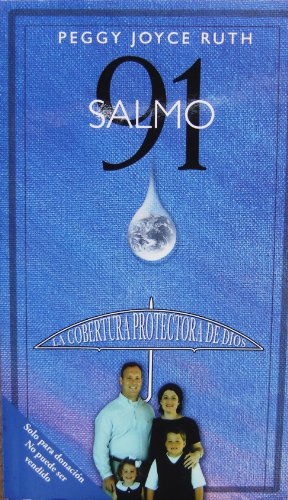
Download PDF Salmo 91 La Cobertura Protectora De DiosBy Peggy Joyce Ruth

Currently, you could know well that this book is primarily recommended not only for the readers that love this subject. This is additionally advertised for all people as well as public type culture. It will certainly not restrict you to check out or otherwise the book. But, when you have started or begun to read DDD, you will understand why exactly the book will offer you al positive things.

Salmo 91 La Cobertura Protectora De DiosBy Peggy Joyce Ruth

Salmo 91 La Cobertura Protectora De DiosBy Peggy Joyce Ruth


Salmo 91 La Cobertura Protectora De DiosBy Peggy Joyce Ruth


Download PDF Salmo 91 La Cobertura Protectora De DiosBy Peggy Joyce Ruth

Many people are aiming to be smarter every day. Exactly how's regarding you? There are numerous ways to evoke this situation; you could find knowledge and also lesson anywhere you desire. However, it will certainly include you to obtain what phone call as the favored point. When you need this type of sources, the following book can be a great choice. Salmo 91 La Cobertura Protectora De DiosBy Peggy Joyce Ruth is the title of guide,

Do you require the literary works resources? Law or politics publications, faiths, or sciences? Well, to show it, juts look for the title or theme that you need based on the classifications supplied. Nonetheless, previous, you are right here in the excellent web site where we present the Salmo 91 La Cobertura Protectora De DiosBy Peggy Joyce Ruth as one of your sources. Also this is not also known as much; you could recognize and also comprehend why we actually suggest you to read this adhering to book.

When you have determined to review it, you have decided to take one step to address the obstacle. It can be done by then reading it. Checking out Salmo 91 La Cobertura Protectora De DiosBy Peggy Joyce Ruth can be a guy option to satisfy your leisures in daily task. It will certainly be much better for establishing the soft data of this book in your gadget so you can delight in reviewing it whenever and also any kind of were.

And afterwards, when you actually enjoy to see just how the needs of this publication as good book, you could directly get it as amazing publication. This publication is really one more time advised in order to enhance you to think more and more. When Salmo 91 La Cobertura Protectora De DiosBy Peggy Joyce Ruth has actually been gathered, you must have recognized just how this book is required. So, which time should be the very best time to start getting as well as reading this book? As soon as possible is the most effective answer.

Salmo 91 La Cobertura Protectora De DiosBy Peggy Joyce Ruth

See images for table of content and others products details.

  • Amazon Sales Rank: #1190938 in Books
  • Published on: 2002
  • Number of items: 1
  • Binding: Paperback
  • 171 pages

Salmo 91 La Cobertura Protectora De DiosBy Peggy Joyce Ruth PDF
Salmo 91 La Cobertura Protectora De DiosBy Peggy Joyce Ruth EPub
Salmo 91 La Cobertura Protectora De DiosBy Peggy Joyce Ruth Doc
Salmo 91 La Cobertura Protectora De DiosBy Peggy Joyce Ruth iBooks
Salmo 91 La Cobertura Protectora De DiosBy Peggy Joyce Ruth rtf
Salmo 91 La Cobertura Protectora De DiosBy Peggy Joyce Ruth Mobipocket
Salmo 91 La Cobertura Protectora De DiosBy Peggy Joyce Ruth Kindle

Salmo 91 La Cobertura Protectora De DiosBy Peggy Joyce Ruth PDF

Salmo 91 La Cobertura Protectora De DiosBy Peggy Joyce Ruth PDF

Salmo 91 La Cobertura Protectora De DiosBy Peggy Joyce Ruth PDF
Share
Tweet
Pin
Share
No komentar

Free Ebook Wylie Churchill-Davidson's A Practice of Anesthesia 7th EditionFrom CRC Press

Reviewing will not just offer the new understanding concerning just what you have actually reviewed. Reviewing will certainly likewise train you to believe open minded, to do sensibly, and to get rid of the boredom. Checking out will certainly be always good and significant if the material that we review is additionally a great publication. As example, Wylie Churchill-Davidson's A Practice Of Anesthesia 7th EditionFrom CRC Press is a god book to read for you. This suggested book becomes one of the books that will get over a brand-new maker to invest the moment intelligently.

Wylie Churchill-Davidson's A Practice of Anesthesia 7th EditionFrom CRC Press

Wylie Churchill-Davidson's A Practice of Anesthesia 7th EditionFrom CRC Press


Wylie Churchill-Davidson's A Practice of Anesthesia 7th EditionFrom CRC Press


Free Ebook Wylie Churchill-Davidson's A Practice of Anesthesia 7th EditionFrom CRC Press

Review a book to make your life running well, review a publication making your experience improves without going somewhere, and review a book for satisfying your free time! These sentences are so familiar for us. For the people that don't like reading, those sentences will be type of very boring words to utter. Yet, for the visitors, they will have bigger spirit when somebody sustains them with the sentences.

Below, coming again as well as again the alternative types of the books that can be your desired choices. Making it right, you are far better to select Wylie Churchill-Davidson's A Practice Of Anesthesia 7th EditionFrom CRC Press satisfying your necessity now. Even this is kind of not intriguing title to check out, the writer makes a very various system of the material. It will certainly let you load interest as well as determination to recognize a lot more.

Reading this Wylie Churchill-Davidson's A Practice Of Anesthesia 7th EditionFrom CRC Press will provide you valuable time to read. Even this is just a book, the concept provided is extraordinary. You could see just how this book is served to make the better future. For you who in fact do not like reading this publication, never mind. However, let us to tell you something intriguing from this publication. If you intend to make better life, get this book. When you want to undertake a terrific life for now as well as future, read this publication.

Due to this book Wylie Churchill-Davidson's A Practice Of Anesthesia 7th EditionFrom CRC Press is marketed by on the internet, it will certainly relieve you not to publish it. you can obtain the soft documents of this Wylie Churchill-Davidson's A Practice Of Anesthesia 7th EditionFrom CRC Press to conserve in your computer, device, and more devices. It depends upon your determination where and also where you will certainly review Wylie Churchill-Davidson's A Practice Of Anesthesia 7th EditionFrom CRC Press One that you require to constantly remember is that reading publication Wylie Churchill-Davidson's A Practice Of Anesthesia 7th EditionFrom CRC Press will certainly never ever end. You will certainly have going to check out other e-book after finishing a book, and it's continually.

Wylie Churchill-Davidson's A Practice of Anesthesia 7th EditionFrom CRC Press

The new edition of this popular text has been extensively revised and updated throughout. It will continue to provide the trainee or practising anesthetist with all the information, both background and practical, that will be needed in the busy clinical setting or during revision for qualifying examinations.


Major changes for the new edition include increased international relevance, made possible by the extensive input of a new American co-editor and the selection of well known contributing authors from around the world. The content is thus applicable to all trainees studying for, and passing, the variety of different certifying examinations for practising anesthesia in a wide range of locales. The book presents both the basic science underlying modern anesthetic practice and up-to-date clinical anesthetic management techniques in a comprehensive, but concise and accessible, style. Reviews are well referenced throughout to guide the reader towards additional information beyond the scope of this text.


The book will continue to provide in a single volume all the information relevant to the physician in training, and serve as a convenient and reliable reference for the anaesthetist to use after training.

  • Sales Rank: #4177154 in Books
  • Published on: 2003-10-31
  • Original language: English
  • Number of items: 1
  • Dimensions: 9.10" h x 2.70" w x 11.20" l, 9.35 pounds
  • Binding: Hardcover
  • 1350 pages

Review
'...an old friend to many anaesthetists...[which] is of value to established consultants and trainees alike.' (of the previous edition)
British Journal of Hospital Medicine

'The book...does an excellent job of presenting the basic science underlying most aspects of anaesthesia.'
Canadian Journal of Anaesthesia

Every department library should have a copy, and it would be money well spent for all trainees and consultants alike to invest in this 7th edition.
Anaesthesia and Intensive Care

About the Author
Thomas Healy is at University of Manchester. Paul Knight is in the Departments of Anesthesiology and Microbiology, Buffalo General Hospital.

Wylie Churchill-Davidson's A Practice of Anesthesia 7th EditionFrom CRC Press PDF
Wylie Churchill-Davidson's A Practice of Anesthesia 7th EditionFrom CRC Press EPub
Wylie Churchill-Davidson's A Practice of Anesthesia 7th EditionFrom CRC Press Doc
Wylie Churchill-Davidson's A Practice of Anesthesia 7th EditionFrom CRC Press iBooks
Wylie Churchill-Davidson's A Practice of Anesthesia 7th EditionFrom CRC Press rtf
Wylie Churchill-Davidson's A Practice of Anesthesia 7th EditionFrom CRC Press Mobipocket
Wylie Churchill-Davidson's A Practice of Anesthesia 7th EditionFrom CRC Press Kindle

Wylie Churchill-Davidson's A Practice of Anesthesia 7th EditionFrom CRC Press PDF

Wylie Churchill-Davidson's A Practice of Anesthesia 7th EditionFrom CRC Press PDF

Wylie Churchill-Davidson's A Practice of Anesthesia 7th EditionFrom CRC Press PDF
Share
Tweet
Pin
Share
No komentar

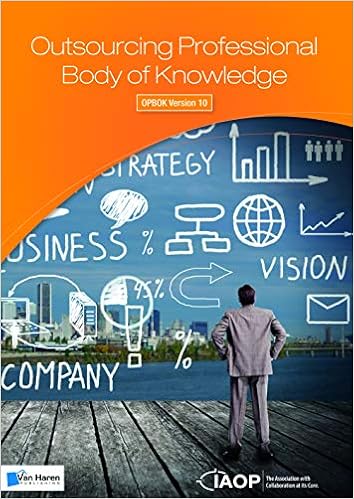
Ebook Download Outsourcing Professional Body Of Knowledge: Opbok Version 10

In checking out Outsourcing Professional Body Of Knowledge: Opbok Version 10, now you might not likewise do conventionally. In this contemporary era, device and computer system will certainly aid you a lot. This is the moment for you to open up the gizmo as well as remain in this website. It is the best doing. You can see the link to download this Outsourcing Professional Body Of Knowledge: Opbok Version 10 below, can not you? Simply click the web link as well as make a deal to download it. You can reach purchase the book Outsourcing Professional Body Of Knowledge: Opbok Version 10 by on-line as well as all set to download and install. It is very different with the conventional way by gong to the book establishment around your city.

Outsourcing Professional Body Of Knowledge: Opbok Version 10

Outsourcing Professional Body Of Knowledge: Opbok Version 10


Outsourcing Professional Body Of Knowledge: Opbok Version 10


Ebook Download Outsourcing Professional Body Of Knowledge: Opbok Version 10

Lots of people are trying to be smarter everyday. Exactly how's concerning you? There are numerous methods to evoke this situation; you could find understanding and also lesson almost everywhere you desire. Nevertheless, it will entail you to obtain what call as the favored point. When you require this kind of resources, the complying with publication can be an excellent choice. Outsourcing Professional Body Of Knowledge: Opbok Version 10 is the title of guide,

Not only from the nation, have individuals around the world liked this book so much. They are the excellent individuals, people who always have readiness and spirit to check out and also boost their ability as well as understanding. Will you be among the? Definitely, when you are relay curious about, you can be one of the terrific individuals. This Outsourcing Professional Body Of Knowledge: Opbok Version 10 is presented to attract you since it is so easy to comprehend. Yet, the significance is so deep. You could feel like facing and acting on your own.

To prove just how this publication will influence you to be much better, you could begin reading now. You might additionally have actually known the writer of this book. This is a very impressive publication that was written by professional writer. So, you may not really feel question of Outsourcing Professional Body Of Knowledge: Opbok Version 10 From the title and also the author additionaled the cover, you will make certain to read it. Even this is an easy publication, the material is very important. It will certainly not need to make you really feel lightheaded after reading.

By downloading this soft data publication Outsourcing Professional Body Of Knowledge: Opbok Version 10 in the online web link download, you are in the initial step right to do. This site truly supplies you convenience of ways to get the most effective e-book, from ideal seller to the brand-new released e-book. You can discover a lot more e-books in this website by visiting every web link that we supply. Among the collections, Outsourcing Professional Body Of Knowledge: Opbok Version 10 is one of the most effective collections to offer. So, the initial you get it, the first you will get all good concerning this book Outsourcing Professional Body Of Knowledge: Opbok Version 10

Outsourcing Professional Body Of Knowledge: Opbok Version 10

Product details

Paperback: 1 pages

Publisher: Van Haren Publishing (June 3, 2014)

Language: English

ISBN-10: 9401800006

ISBN-13: 978-9401800006

Product Dimensions:

6.7 x 0.9 x 9.4 inches

Shipping Weight: 1.7 pounds (View shipping rates and policies)

Average Customer Review:

4.0 out of 5 stars

2 customer reviews

Amazon Best Sellers Rank:

#1,060,129 in Books (See Top 100 in Books)

Good book, a detailed overview on outsourcing. Must read for O/S professionals

If you're a strategic sourcing, procurement, or vendor management professional this book sets the baseline expectations for competence in your field. While it's the basis for industry certification through the International Association of Outsourcing Professionals, it's also an excellent reference guide. Holistic materials include defining and communicating outsourcing as a management practice, developing and end-to-end process for making sourcing decisions, integrating strategic sourcing into your organizations business strategy and operations, creating and sustaining high performance teams to complete sourcing programs/projects, developing and communicating business requirements to bidders, evaluating and selecting service providers, developing financial case and pricing, contracting and negotiating with suppliers, managing transitions, and performing governance. It's not "the" end all, be all book, but it's invaluable for entry-level through mid-level professionals in the field and is used by buy side, sell side, and advisory organizations. A great companion volume is Strategic Sourcing in the New Economy: Harnessing the Potential of Sourcing Business Models for Modern Procurement

Outsourcing Professional Body Of Knowledge: Opbok Version 10 PDF
Outsourcing Professional Body Of Knowledge: Opbok Version 10 EPub
Outsourcing Professional Body Of Knowledge: Opbok Version 10 Doc
Outsourcing Professional Body Of Knowledge: Opbok Version 10 iBooks
Outsourcing Professional Body Of Knowledge: Opbok Version 10 rtf
Outsourcing Professional Body Of Knowledge: Opbok Version 10 Mobipocket
Outsourcing Professional Body Of Knowledge: Opbok Version 10 Kindle

Outsourcing Professional Body Of Knowledge: Opbok Version 10 PDF

Outsourcing Professional Body Of Knowledge: Opbok Version 10 PDF

Outsourcing Professional Body Of Knowledge: Opbok Version 10 PDF
Share
Tweet
Pin
Share
No komentar

Free PDF A Love No Less: Two Centuries of African American Love LettersBy Pamela Newkirk

It is additionally exactly what you will obtain from getting this book as recommendation to enrich your high quality and also knowledge. It will reveal you just how kind a publication is. Every sentence as well as every web page of this A Love No Less: Two Centuries Of African American Love LettersBy Pamela Newkirk will reveal you brand-new point. It will certainly not compel you to know or remember all sentences. One of the most things to constantly bear in mind is the lesson or message that is told in this book.

A Love No Less: Two Centuries of African American Love LettersBy Pamela Newkirk

A Love No Less: Two Centuries of African American Love LettersBy Pamela Newkirk


A Love No Less: Two Centuries of African American Love LettersBy Pamela Newkirk


Free PDF A Love No Less: Two Centuries of African American Love LettersBy Pamela Newkirk

Come with us to read a brand-new publication that is coming recently. Yeah, this is a brand-new coming book that many individuals actually want to check out will you be one of them? Certainly, you need to be. It will certainly not make you feel so tough to appreciate your life. Even some individuals assume that reading is a difficult to do, you need to make sure that you can do it. Hard will certainly be really felt when you have no suggestions about what sort of book to check out. Or often, your analysis material is not fascinating sufficient.

The book with that A Love No Less: Two Centuries Of African American Love LettersBy Pamela Newkirk features the some inspirations the motivations can be taken for you that strategy such a brand-new business. When you have no idea to intend what to do, this book will aid you. It takes place when you depend read it perfectly and get it extremely. Are you interested to read it? Allow's take few minutes to handle this publication and after that take it as reading material.

Yeah, hanging around to read guide A Love No Less: Two Centuries Of African American Love LettersBy Pamela Newkirk by on the internet can likewise provide you favorable session. It will reduce to interact in whatever problem. In this manner could be more intriguing to do and simpler to review. Now, to obtain this A Love No Less: Two Centuries Of African American Love LettersBy Pamela Newkirk, you can download and install in the web link that we provide. It will certainly aid you to obtain very easy method to download the e-book A Love No Less: Two Centuries Of African American Love LettersBy Pamela Newkirk.

When obtaining A Love No Less: Two Centuries Of African American Love LettersBy Pamela Newkirk as your reading source, you could obtain the simple means to stimulate or get it. It needs for you to choose and also download and install the soft data of this referred publication from the web link that we have actually given here. When everyone has actually that excellent feeling to read this publication, she or the will always assume that checking out book will certainly always assist them to get far better destination. Wherever the location is permanently much better, this is just what most likely you will obtain when selecting this publication as one of your reading resources in spending free times.

A Love No Less: Two Centuries of African American Love LettersBy Pamela Newkirk

A Delightful paean to African American love, this treasury of fifty letters written by well known figures and ordinary folk alike resonates with the joy and tenderness of romance, and offers glimpses into the social, literary, and political lives of black Americans throughout the last two centuries.

An elegantly designed volume, printed in sepia and enhanced with photographs, A LOVE NO LESS presents the letters of African American lovers of all walks of life--from slave letters to the celebrated turn-of-the-twentieth-century poet Paul Laurence Dunbar to soldiers fighting World War II, to notable entertainers, businessmen, and civic leaders. Whether they were penned by literary masters or hastily scribbled by soldiers writing home to their wives or girlfriends, the letters are eloquent expressions of the writers’ most intimate feelings and touching revelations of the things that matter most in their lives.

A LOVE NO LESS is a testament to black love and to the bonds that endure in the face of physical separation, harsh times, and personal misfortunes. It also provides a peek into the more public arena, as writers tell their lovers about their everyday activities and encounters. Paul Laurence Dunbar writes to his wife about meeting Booker T. Washington and attending a lecture by W. E. B. DuBois. Letters from the Harlem Renaissance capture the excitement and vibrancy of that extraordinary period with stories about dinners, theater parties, shows and social outings with Langston Hughes, Carl Van Vechten and other luminaries. In a letter to her new husband written in the 1930s, stage and screen star Fredi Washington describes seeing a stereo for the first time and recounts her negotiations for a role in a Paramount film.

An enchanting and inspiring look at the power of love to transform and sustain, A LOVE NO LESS is the perfect gift for Valentines Day, anniversaries, birthdays, and weddings, a book that everyone who has ever been in love will treasure.

  • Sales Rank: #571801 in Books
  • Published on: 2003-01-14
  • Released on: 2003-01-14
  • Original language: English
  • Number of items: 1
  • Dimensions: 7.77" h x .90" w x 5.36" l,
  • Binding: Hardcover
  • 224 pages

From Library Journal
In this collection, Pulitzer Prize-winning journalist Newkirk presents letters from all sorts of people-slaves, entertainers, businessmen, and soldiers, among others-who express their most intimate thoughts and feelings.
Copyright 2002 Reed Business Information, Inc.

From the Inside Flap
A Delightful paean to African American love, this treasury of fifty letters written by well known figures and ordinary folk alike resonates with the joy and tenderness of romance, and offers glimpses into the social, literary, and political lives of black Americans throughout the last two centuries.

An elegantly designed volume, printed in sepia and enhanced with photographs, A LOVE NO LESS presents the letters of African American lovers of all walks of life--from slave letters to the celebrated turn-of-the-twentieth-century poet Paul Laurence Dunbar to soldiers fighting World War II, to notable entertainers, businessmen, and civic leaders. Whether they were penned by literary masters or hastily scribbled by soldiers writing home to their wives or girlfriends, the letters are eloquent expressions of the writers? most intimate feelings and touching revelations of the things that matter most in their lives.

A LOVE NO LESS is a testament to black love and to the bonds that endure in the face of physical separation, harsh times, and personal misfortunes. It also provides a peek into the more public arena, as writers tell their lovers about their everyday activities and encounters. Paul Laurence Dunbar writes to his wife about meeting Booker T. Washington and attending a lecture by W. E. B. DuBois. Letters from the Harlem Renaissance capture the excitement and vibrancy of that extraordinary period with stories about dinners, theater parties, shows and social outings with Langston Hughes, Carl Van Vechten and other luminaries. In a letter to her new husband written in the 1930s, stage and screen star Fredi Washington describes seeing a stereo for the first time and recounts her negotiations for a role in a Paramount film.

An enchanting and inspiring look at the power of love to transform and sustain, A LOVE NO LESS is the perfect gift for Valentines Day, anniversaries, birthdays, and weddings, a book that everyone who has ever been in love will treasure.

About the Author
PAMELA NEWKIRK is a Pulitzer Prize-winning journalist and Associate Professor of Journalism in the Department of Journalism and Mass Communications at New York University. She is the author of Within the Veil: Black Journalists, White Media. Her articles have appeared in numerous publications, including The New York Times, The Washington Post, The Nation, Essence, and ARTnews. She lives in New York City with her husband and children.

A Love No Less: Two Centuries of African American Love LettersBy Pamela Newkirk PDF
A Love No Less: Two Centuries of African American Love LettersBy Pamela Newkirk EPub
A Love No Less: Two Centuries of African American Love LettersBy Pamela Newkirk Doc
A Love No Less: Two Centuries of African American Love LettersBy Pamela Newkirk iBooks
A Love No Less: Two Centuries of African American Love LettersBy Pamela Newkirk rtf
A Love No Less: Two Centuries of African American Love LettersBy Pamela Newkirk Mobipocket
A Love No Less: Two Centuries of African American Love LettersBy Pamela Newkirk Kindle

A Love No Less: Two Centuries of African American Love LettersBy Pamela Newkirk PDF

A Love No Less: Two Centuries of African American Love LettersBy Pamela Newkirk PDF

A Love No Less: Two Centuries of African American Love LettersBy Pamela Newkirk PDF
Share
Tweet
Pin
Share
No komentar
Newer Posts
Older Posts

About me

About Me


Aenean sollicitudin, lorem quis bibendum auctor, nisi elit consequat ipsum, nec sagittis sem nibh id elit. Duis sed odio sit amet nibh vulputate.

Follow Us

Labels

Ebooks

recent posts

Blog Archive

  • ▼  2019 (17)
    • ▼  Juli (2)
      • Free Download Docker: The Ultimate Beginners Guide...
      • Ebook Fabjob Guide to Become a Wedding Planner (Wi...
    • ►  Juni (1)
    • ►  Mei (3)
    • ►  April (1)
    • ►  Maret (5)
    • ►  Februari (3)
    • ►  Januari (2)
  • ►  2018 (32)
    • ►  Desember (1)
    • ►  November (4)
    • ►  Oktober (3)
    • ►  September (6)
    • ►  Agustus (5)
    • ►  Juli (1)
    • ►  Juni (3)
    • ►  April (5)
    • ►  Maret (2)
    • ►  Februari (1)
    • ►  Januari (1)
  • ►  2017 (28)
    • ►  Desember (4)
    • ►  November (1)
    • ►  Oktober (1)
    • ►  September (2)
    • ►  Agustus (5)
    • ►  Juli (2)
    • ►  Juni (2)
    • ►  Mei (2)
    • ►  April (2)
    • ►  Maret (3)
    • ►  Februari (4)
  • ►  2016 (34)
    • ►  Desember (1)
    • ►  November (3)
    • ►  Oktober (5)
    • ►  September (1)
    • ►  Agustus (5)
    • ►  Juli (4)
    • ►  Juni (3)
    • ►  Mei (4)
    • ►  April (1)
    • ►  Maret (3)
    • ►  Februari (1)
    • ►  Januari (3)
  • ►  2015 (22)
    • ►  Desember (2)
    • ►  November (1)
    • ►  Oktober (4)
    • ►  September (3)
    • ►  Agustus (1)
    • ►  Juli (1)
    • ►  Juni (2)
    • ►  Mei (1)
    • ►  April (2)
    • ►  Maret (2)
    • ►  Januari (3)
  • ►  2014 (22)
    • ►  Desember (3)
    • ►  November (1)
    • ►  September (2)
    • ►  Agustus (3)
    • ►  Juli (2)
    • ►  Juni (1)
    • ►  Mei (2)
    • ►  April (1)
    • ►  Maret (1)
    • ►  Februari (2)
    • ►  Januari (4)
  • ►  2013 (18)
    • ►  Desember (3)
    • ►  November (1)
    • ►  Oktober (2)
    • ►  September (1)
    • ►  Agustus (3)
    • ►  Juni (2)
    • ►  April (2)
    • ►  Februari (3)
    • ►  Januari (1)
  • ►  2012 (27)
    • ►  Desember (2)
    • ►  November (2)
    • ►  Oktober (1)
    • ►  Agustus (2)
    • ►  Juli (1)
    • ►  Juni (2)
    • ►  Mei (6)
    • ►  April (2)
    • ►  Maret (2)
    • ►  Februari (1)
    • ►  Januari (6)
  • ►  2011 (32)
    • ►  Desember (1)
    • ►  November (4)
    • ►  Oktober (1)
    • ►  September (3)
    • ►  Agustus (3)
    • ►  Juli (2)
    • ►  Juni (3)
    • ►  Mei (7)
    • ►  April (1)
    • ►  Maret (3)
    • ►  Januari (4)
  • ►  2010 (23)
    • ►  November (5)
    • ►  Oktober (2)
    • ►  September (2)
    • ►  Agustus (2)
    • ►  Juli (1)
    • ►  Juni (2)
    • ►  Mei (3)
    • ►  Maret (3)
    • ►  Februari (1)
    • ►  Januari (2)
FOLLOW ME @INSTAGRAM

Created with by BeautyTemplates | Distributed by Gooyaabi Templates